Keegan Bradley: Why the US players are getting paid to play in the Ryder Cup
Last updated:
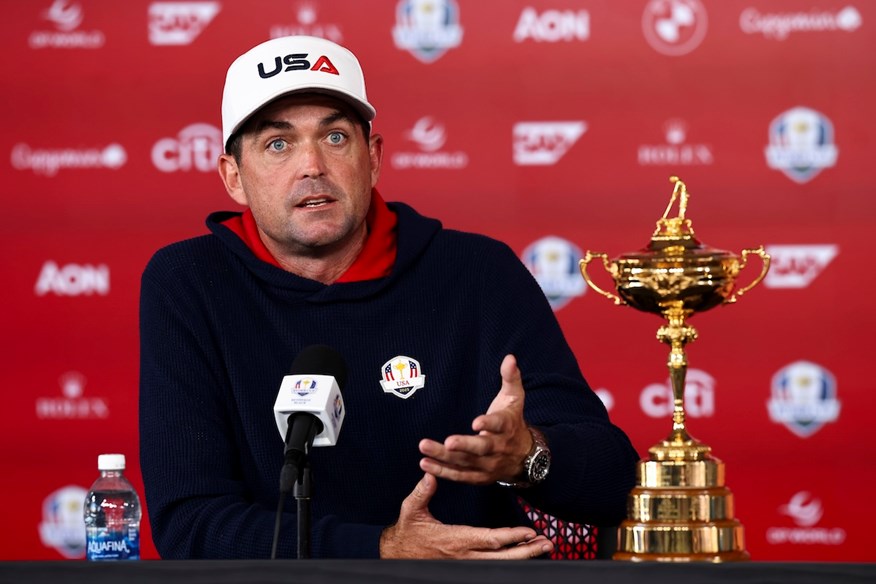
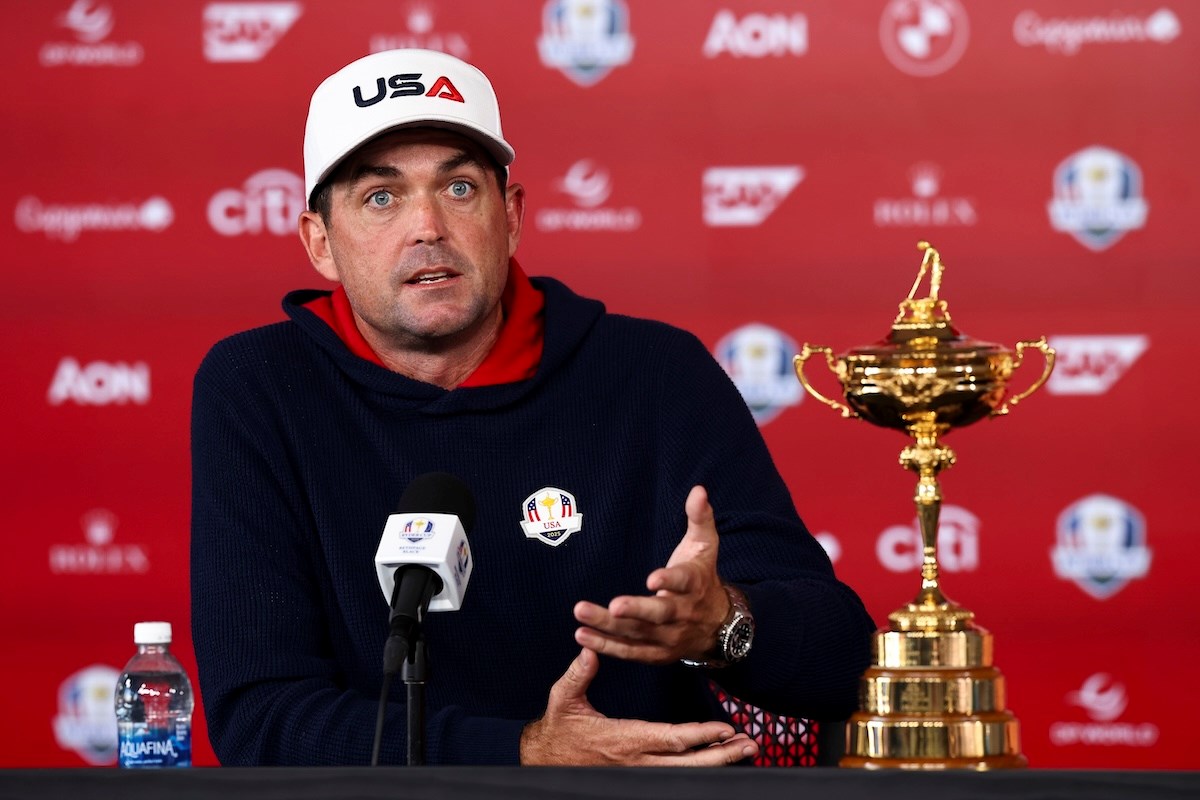
It’s caused a huge storm in recent years, so it was inevitable that Keegan Bradley would be asked about the Ryder Cup pay row in his opening press conference as US captain. Rob Jerram was there…
We were little more than 15 hours into Ryder Cup week when the question of money reared its ugly head.
Two years ago in Rome, it dominated the headlines with rumors that Patrick Cantlay led a revolt in the US team room over the lack of a fee for their services. He denied it, of course, but Cantlay’s decision not to wear a USA cap was allegedly in protest at not receiving payment for the week, leading to the ugly scenes on the 18th green on Saturday evening when his caddie Joe LaCava mocked fans by waving his own headgear in celebration, causing a clash with Rory McIlroy that later spilled into the car park.
Now, for the first time, the American players will be paid for teeing it up for Team USA at Bethpage.
As well as receiving $300,000 to donate to a charity of their choice – up from the $200k they’ve been given since 1999 – each player will be given a $200,000 stipend, which they can spend as they wish.
It’s led to further suggestions that Team Europe, who continue not to receive any Ryder Cup pay, care more about the biennial clash.
“Well, I’m not concerned about what Europe does or what they think,” US captain Keegan Bradley said as he sat alongside his counterpart Luke Donald during Monday’s traditional opening press conference.
“I’m concerned about what my team is doing. I was tasked with a job the PGA of America asked me to do, and this was what we decided. We wanted to bring the Ryder Cup into today’s age, and we felt like this was the best way to do it. We copied a lot of what the Presidents Cup does.”
Bradley was also asked about the “optics” of giving money to players for appearing in the sport’s pinnacle event when they are already handsomely rewarded for playing the sport week-to-week.
“I don’t really get that, but I think the goal here was that the charity dollars hadn’t been raised in 25, 26 years, and that’s what we started out doing,” he revealed.
“Again, we did a lot of what the Presidents Cup did, and these players are going to do the right thing and do a lot of really good with this money. You can say that, but I think that the players are really good people and are going to do a lot of good things.”
But it’s not just the players who will received the stipend. The US skipper, who played a key role in the payment decision, will also be paid the $200,000 and plans to give it to charity. As for the rest of his player’s plans, he wasn’t willing to willing to divulge.
“The PGA of America came to me, they wanted to bring the Ryder Cup into the present day,” the 39-year-old insisted.
“The charity dollars hadn’t changed since 1999 and they asked me to sort of shepherd their way into making it into 2025.
“I think for everyone it’s a personal decision. A lot of guys aren’t comfortable sharing what they’re going to do with their money, but we’re going to donate.
“For us, the PGA of America, this happens after the Ryder Cup, so this is something that we’ll worry about after. But ultimately, the PGA of America asked me to help out with this, and this is the best way we came up with to do it.”
And the US skipper was quick to defend his players, and how they choose to spend their payment.
“I think that’s a personal decision. I don’t donate to charities to publicize what we’re doing. These guys on our team are incredible people, and they do a lot of incredible things with charity dollars and with their foundations. A lot of them aren’t comfortable sharing that sort of information, and I feel the same way.”
Meanwhile, Bradley admitted that his decision not to give himself a spot on the team had hit hard when he arrived at Bethpage to begin the long-awaited biennial clash.
“Definitely – I’ve thought about it every second,” he said, when asked if he’d allowed himself to think what it would have been like to tee it up.
“But I’ve also thought about how impossible it would be. I was picked to do this job as captain, and there’s been certain things that I’ve done during the week or lead-up that if I was playing, I don’t think I could have done at the level that I needed to do them at.
“I catch myself every now and then looking down the fairway, seeing the guys walk down the fairway and think how badly I’d like to do that, and how badly I’d want to be in the group with Scottie Scheffler and seeing him play and being his teammate.
“But I feel like I’ve been called for a bigger cause here, to help our guys get ready to play and play at the highest level. In the back of my mind I’m always thinking, ‘I could have been out there.’ – but, ultimately, I can’t tell you how much I’ve enjoyed being the captain and how I’ve enjoyed not having to worry about getting to sleep and getting my rest or how I haven’t had to think about what time I’m going to go practice or meet my coach and then meet the guys.
“It simplified things a lot for me.”
-
 Keegan Bradley addressed the Ryder Cup pay situation at Bethpage.